
By: EarthSong Long
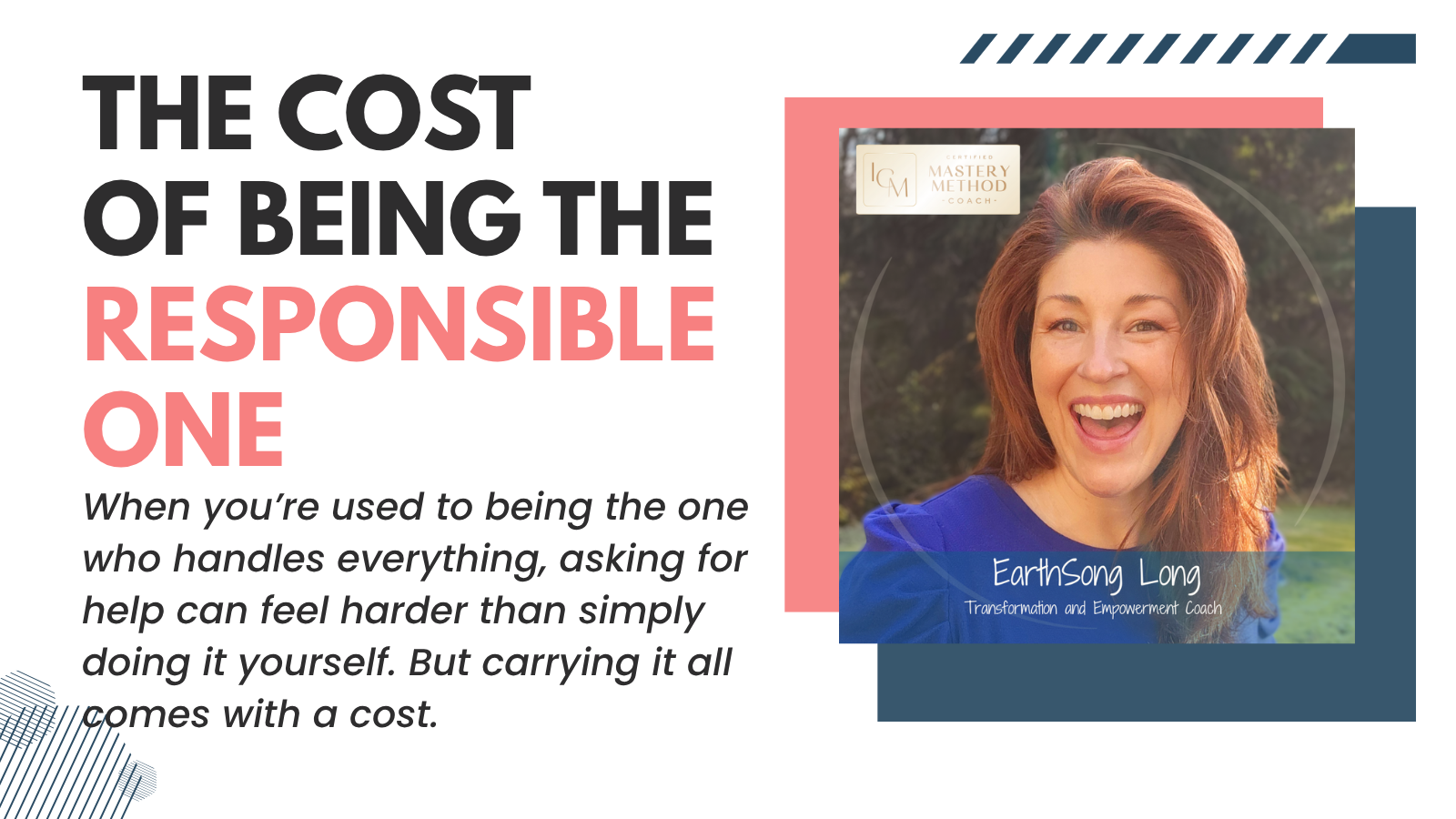
You’re the one who tracks, remembers, and handles it all:
Appointments, deadlines, even anniversaries that no one else is keeping track of. And somehow, you’re also the one apologizing for needing help. Pushing back feels riskier than being tired, and delegating hasn’t always worked out, so you keep going. Sound familiar?
As a personal transformation coach, I work with ambitious, high-achieving women - many of them parents - who carry this exact pattern.
We call it hyper-independence: the reflex to handle everything yourself, quietly and competently, never asking for help.
It’s often praised as strength or mistaken for not needing anyone. But underneath, it’s usually something else entirely. The way out isn’t more willpower; it’s small, deliberate proof that gently teaches your nervous system it’s safe to trust yourself again.
Being the responsible one is a safety strategy.
Maybe you were the kid who learned that things went more smoothly when you managed them yourself, or that others couldn’t always be counted on. Self-reliance became safer than depending on someone else. That isn’t a character flaw - it was a smart adaptation for what you were facing. The brain feels safest when it can predict outcomes (keep things the same), but this comes at the cost of trusting yourself to handle things any other way.
The problem is that this adaptation is outdated. What once protected you is now quietly costing you: your energy, your rest, your relationships, and the chance for anyone else to actually show up for you the way you show up for everyone else. Every time you carry something you didn't have to carry alone, that's energy you don't get back.
Why you can't just "let go" of the pattern
Here’s what trips most people up: hyper-independence and over-responsibility aren’t just mindset problems you can think your way out of. They’re nervous system patterns.
When you’ve always had to handle things, your body reads asking for help or leaving something undone as a threat
Something unsafe, something that might not get caught, something you’ll pay for later. So you avoid the ask. That avoidance confirms your belief that you have to do it all yourself, adding more to your plate, draining you further, and keeping your nervous system on edge. It’s a loop, not a fresh decision each day.
This is why self-trust and nervous system regulation are so closely linked.
You can’t build true trust in yourself while your body is bracing for impact, and you can’t calm your nervous system by taking on more. The two have to move together.
Self-Trust Builds with Microactions
This is where microactions come in, and why I keep them small on purpose. If you try to overhaul the pattern all at once - hand off everything, ask for everything, let it all go - your nervous system will read that as a genuine threat, not a helpful change. Chances are, you’ll crash, overcorrect, or quietly take it all back. And that crash becomes more evidence for the very belief you’re trying to unlearn: see, I really do have to do this myself.
A microaction works because it’s small enough to complete without tripping that alarm. It gives your nervous system a chance to register something different: I handed off a small thing, and I survived it. That’s the proof self-trust is built from - and where momentum for change begins.
Let's experiment:
I invite you to take a minute to explore where in your life you might ask for help or delegate a task. Start with low-hanging fruit - something that almost feels too small to make a difference.
Take a look at the suggestions below. Maybe they will spark an idea for you:
Send one specific ask: "Can you handle bedtime tonight?" or "Can you send the email about ______", not a vague request like "can you help with things."
Let a task sit undone for 24 hours and see what actually happens if you don't rescue it.
Say "I need to think about it" instead of automatically saying yes to a request.
None of these will fix the whole pattern at once - and that’s the point. Each is small enough to serve as evidence without overwhelm. Evidence is what a nervous system actually believes.
Evidence strengthens your capacity for change.
This is where the deeper, truly transformative work begins - whether in my 1:1 or group coaching. Rebuilding self-trust from the inside out is possible, no matter how long you’ve been carrying it all. If this message speaks to you, I invite you to take one small, courageous step today. Connect with a community of women on the same journey, access more practical insights on my social channels,download my free PDF, or schedule a Clarity Session to experience my coaching style and discover how coaching can help you reclaim your energy, your confidence, and a sense of ease. You are worthy of support - and you don’t have to do it alone.
EarthSong is a personal transformation coach and founder of Soulfully Authentic Coaching. She helps ambitious, high-achieving women break free from patterns such as hyper-independence and perfectionism, guiding them toward authentic self-trust and sustainable growth. Learn more at soulfullyauthentic.com or follow @SoulfullyAuthentic on Instagram.