
PULLING ITS WEIGHT: Why We Always Program Deadlifts
Written by Melanie Lofgren
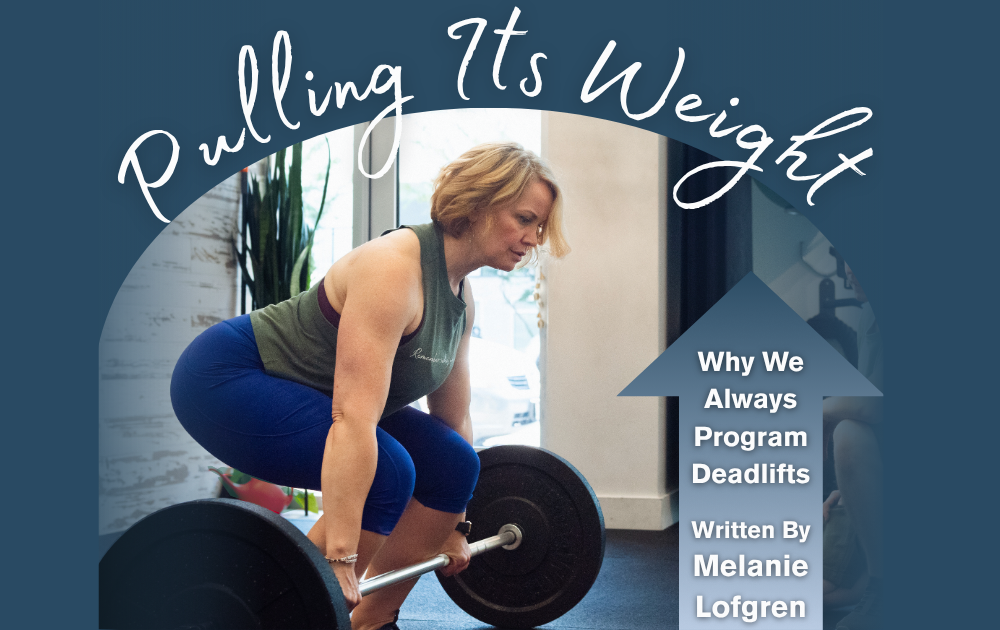
I cannot be the only one who has wondered, "why am I always doing deadlifts?"
Deadlifts show up in every program.... conventional, Romanian, single leg.... they are always there. And honestly, for good reason.
Deadlifts are one of the foundational movements, not just for understanding other exercises at the gym, but for moving well through everyday life.
You know how you're always told to lift with your legs and not your back? Knowing how to deadlift means that you learn how to do that correctly, and when you inevitably ignore that advice, you're far less likely to wreck yourself. A deadlift trains your legs, core, and back to work together to safely pick something up off the ground. Simple as that.
Which brings us to one of the best things about deadlifts.... they work multiple muscles at once. They are a true compound exercise, which is exactly why they'll always have a place in your program. At MBodied, we work with the understanding that life doesn't happen in isolated muscles. Your body works as a team in everything you do. Ever hear me cue "push your feet into the ground" or "squeeze your glutes" during a chest press? That's because a chest press is also a compound movement.
But back to deadlifts. Beyond helping you pick up your kid and a case of water in one trip, deadlifts are incredibly effective for building bone density, muscle strength, and muscle mass. Depending on the variation, you can target more of your glutes, hamstrings, specific glute muscles, or even your quads. Because they recruit multiple large muscle groups, they also create a higher demand for energy and a hormonal response (which translates to a metabolism boost and increased cardiovascular strength).
So if you only have 20 minutes to work out? Warm up and do a set of deadlifts. You'll have trained your glutes, hamstrings, core, back, heart, grip, and perhaps your quads. That's about as efficient as it gets.
The trickiest part of deadlifts is navigating the variations.... and for some people, working around back pain. The different variations exist for a reason (your goals, your body's needs, and building a well-rounded training plan). It's worth learning the differences and practicing each one.
As for back pain.... your core and back are likely both areas that need more strength, and deadlifts can actually help build exactly that. Start lighter, work on strengthening your core and back through other movements too, and make sure you're activating your core, glutes, and lats before you load up. Learning the different variations will also help you adapt your program on the days your back decides to tell you about it.
To get hands-on with all of these variations, I'm hosting a deadlift workshop on Saturday, April 25 from 11:30am–1pm.
Come practice, ask questions, and leave feeling a lot more confident about one of the most valuable movements you'll ever learn.
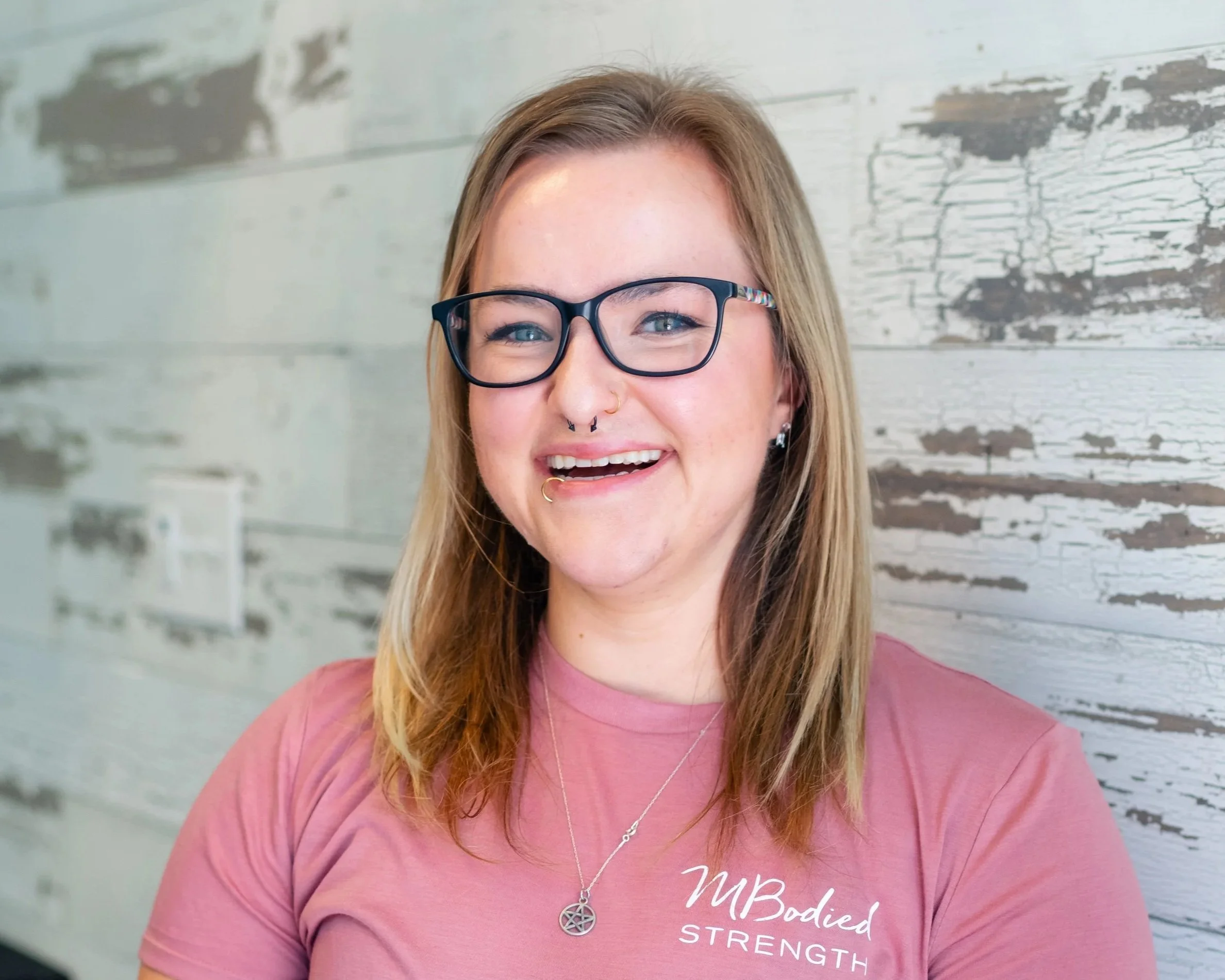
Melanie Lofgren
ISSN Certified Trainer and Nutrition Counselor
I went from hating working out to my life and career goals revolving around fitness!
My journey began when I was at rock bottom. I was severely depressed, broke, and losing hope. I had been through 4 years of continuous sexual traumas while living in a community that was not welcoming of my queer identity.
I had gotten to the point where I knew if I didn’t take action, someone else would have to step in to care for me. So, I found a fun way to work out that kept me accountable. I quickly learned that movement was essential to help me overcome my PTSD, anxiety, and depression. It remains one of the primary ways I manage my mental health today.
Through moving my body, I gained confidence, courage, and strength (mental & physical). I learned how to love myself and my body for the first time. Now I want to pass along all that I have learned and help others to know the strength and resiliency they possess as well!